



Do a Fire Hydrant 7 Days a Day: Does This Low-Impact Exercise Really Strengthen Your Glutes and Core?

In fitness, achieving a tight and toned lower body doesn't necessarily require heavy lifting or complex movements. Sometimes, the most effective exercises are the simplest. Try the Fire Hydrant exercise—a low-impact, bodyweight exercise popular for its ability to effectively target your glutes, hips, and core. Despite its simplicity, the Fire Hydrant exercise offers numerous benefits, including improved hip mobility, stronger core stability, and a sculpted butt.
This article explores how doing the Fire Hydrant exercise every day for seven days can strengthen your glutes and core, providing variations, techniques, and a complete weekly routine to maximize your results.
What is the Fire Hydrant Drill?
The Fire Hydrant Drill is a bodyweight exercise named after the way a dog lifts its leg to mark a fire hydrant. It involves getting on all fours, bending your knees 90 degrees, and lifting one leg outward while engaging your glutes and core.
Targeted Muscles
While it may seem like a simple exercise, the fire hydrant works several key muscle groups:
Gluteus medius: This is the primary target. Strengthening this muscle stabilizes the pelvis and improves hip abduction, which is crucial for walking, running, and lateral movements.
Gluteus minimus: This muscle is often under-trained in traditional glute exercises, but it also plays a key role in hip stability.
Core Muscles: The transverse abdominis and obliques help maintain balance and prevent trunk rotation.
Hip Flexors: Hip mobility helps maintain flexibility and prevent strain, especially for those who sit for long periods of time.
By focusing on these muscles, the fire hydrant improves both aesthetics and functionality, making it a must-have for lower body and core training.
Benefits of the Fire Hydrant
The fire hydrant offers a variety of benefits, making it a versatile exercise for fitness enthusiasts of all levels:
1. Glute Activation and Strength
While squats and deadlifts work the overall gluteus medius and minimus, the fire hydrant specifically targets the gluteus medius and minimus. These smaller muscles are crucial for maintaining balance and avoiding hip imbalances, which can lead to knee and lower back pain.
2. Core Stability
Balancing around a fire hydrant requires engaging your entire core. Over time, this strengthens your abdominals and obliques, improving posture and reducing stress on your lower back during daily activities.
3. Hip Mobility and Flexibility
The lateral movement of this exercise promotes hip abduction and external rotation, which is particularly beneficial for those with hip tightness or limited range of motion. Improved hip mobility can translate into improved performance in squats, lunges, and running.
4. Injury Prevention
By strengthening the gluteal muscles and stabilizer muscles, the fire hydrant helps protect the knees, hips, and lower back from common injuries. Strong stabilizers ensure better posture and more efficient movement patterns.
5. Low-Impact Exercise
The fire hydrant is gentle on the joints, making it ideal for beginners, seniors, or anyone looking to reduce impact stress while building strength.
Fire Hydrant Procedure: Step-by-Step Guide
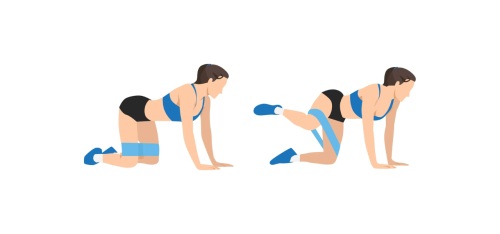
Starting Position
Start on all fours with your hands directly under your shoulders and your knees directly under your hips.
Brace your core and maintain a neutral spine. Avoid excessive arching or slumping of your lower back.
Keep your gaze downward to maintain neck alignment.
Execution
Lift one leg outward, keeping your knee bent at 90 degrees.
Raise your leg until your thigh is parallel to the floor or slightly higher, depending on your flexibility.
Get the most glute involvement, pause for one or two seconds at the top.
Return to the starting position by slowly lowering your leg.
Repeat 10-15 times, then switch legs.
Note: Breathe in as you bring your leg down and out as you bring it up.
Tips for Proper Form
● Avoid rotating your hips; keep your hips perpendicular to the ground.
● Get the most muscle activation, move deliberately and slowly.
● Get the most muscle activation, move deliberately and slowly. glutes.
● Maintain core tension throughout to prevent lower back strain.
7-Day Fire Hydrant Challenge
Use the Fire Hydrant daily for a week to significantly improve your strength, balance, and flexibility. Here's what to expect:
Day 1: Getting Started
Focus on form and controlled movements.
Do 3 sets of 10 reps per leg.
Expect some mild muscle activity, but minimal fatigue.
Days 2-3: Muscle Awareness
Hip and core muscles begin to engage more effectively.
Minor soreness may occur, indicating effective stimulation.
Continue with 3-4 sets of 12 reps per leg.
Days 4-5: Increase Intensity
Pause for 2-3 seconds between each lift.
To further work your muscles, think about wrapping a resistance band over your thighs.
Increase your reps to 15-20 reps per set.
Days 6-7: Significant Improvements
Expect improved hip mobility and glute activation.
The movement will feel smoother, and your range of motion may increase.
Better posture and everyday activities are facilitated by increased core stability.
Modifying Fire Hydrants for Better Results

1. Ankle-Loaded Fire Hydrant
The addition of ankle weights speeds up the development of hip and glute strength by increasing resistance and intensity.
2. Forearm Fire Hydrant
Perform the exercise with your forearms instead of your hands to reduce wrist stress and provide a slightly different angle of engagement.
3. Standing Fire Hydrant
Perform the exercise standing up with the support of a wall or chair to challenge your balance and use your stabilizers in a different way.
4. Fire Hydrant Kickback
After lifting your knees outward, extend your legs straight back to more intensely engage your glute muscles.
5. Fire Hydrant Pulse
Rather than lowering your legs completely, perform small pulses at the top of the lift to increase the tension time.
Safety Tips
● Before starting, warm up with five to ten minutes of dynamic stretching or light aerobics.
● Keep your spine neutral and avoid arching your lower back.
● Start with bodyweight and work your way up to resistance.
● Stop if you feel severe pain in your hips, knees, or lower back.
● Gradually increase repetitions or resistance to prevent overuse injuries.
Common Mistakes to Avoid
Jerking: Speed reduces glute muscle activation and increases the risk of hip rotation.
Twist Your Hips: Keep your hips flat to maintain focus on your glutes.
Ignoring Core Engagement: Without core support, your lower back may compensate for weak glute strength.
Premature Overload: Adding resistance before mastering the exercise can lead to strain or injury.
The fire hydrant may seem simple, but it's effective for strengthening your glute muscles, improving core stability, and improving hip mobility. Just seven days of consistent use can lead to significant improvements, including better muscle engagement, increased range of motion, and improved posture. While it can't replace heavy compound lifts for muscle growth, it's an essential accessory movement in any fitness program.
For beginners, the Fire Hydrant exercise serves as a low-impact introduction to glutes and core training, while advanced trainees can challenge themselves with resistance bands, ankle weights, and a variety of exercises. By consistently practicing the Fire Hydrant exercise and incorporating it into your weekly routine, you can strengthen your glutes, stabilize your core, and improve your movement efficiency—both in training and in everyday life.
Recommended for you: