


Aqua Board Training: Combining Core Stability with Poolside Fun
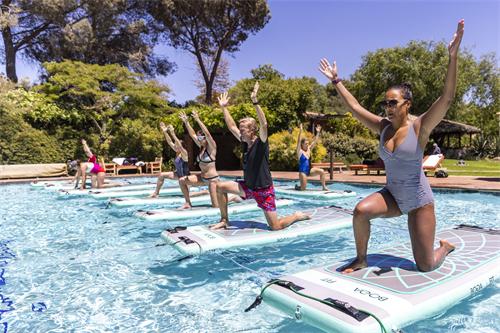
Fitness doesn't always mean running on the pavement, lifting weights, or working up a sweat in a crowded gym. Sometimes, it can be sun, splashes, and laughter—all designed to put your muscles through a serious workout. Experience aqua board training, a fun yet powerful trend that blends the intensity of strength training with the tranquility of water.
On the surface, it may look like just another poolside activity: a floating mat tied in place, waiting for someone to hop on. But the moment you step on it, your body quickly understands that this is no lazy pool float. Every sway demands core strength, every squat tests your balance, and every lunge feels like an adventure. This exercise strengthens your stabilizing muscles, improves your focus, and allows you to have fun—all while being low-impact and joint-friendly.
Aqua Board classes aren't just about fitness; they encourage you to have fun. They encourage you to laugh when you lose your balance, get back up, and try again. It's yoga, HIIT, meditation, and relaxation all rolled into one—an all-in-one experience that proves exercise doesn't have to be just routine; it can be transformative, refreshing, and fun.
The Rise of Waterboarding
This fitness style stems from innovations like the Aqua Body Strong™ (ABS™) waterboard, which uses a tethered, inflatable exercise board for use in pools, lakes, or docks. These boards create an unstable surface, forcing your body to activate deep core stabilization muscles to stay upright.
On the surface, waterboarding blends elements of Pilates, yoga, balance training, and high-intensity interval training (HIIT). But because the board sways beneath your feet, every move becomes a dance—or a puddle romp—with muscle engagement cranked up to 11.
Core Stability and the Other Muscles You Forgot
When you attempt any movement on an unstable surface, your body engages muscles often overlooked in traditional exercises. The abdominal muscles, obliques, and the small stabilizer muscles around your pelvis and spine—they all work together to help you stay balanced and upright.
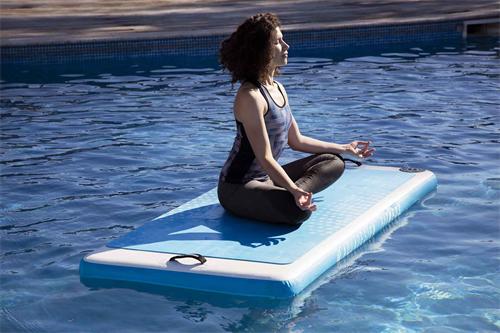
Even sitting on a surfboard can strengthen your core muscles. Add squats, lunges, push-ups, burpees, or sun salutations to the mix, and you'll get the same workout as land-based training, but with more effort and awareness. Expect stronger glutes, better posture, and a deeper mind-body connection.
One of the most appealing aspects of waterboarding lessons is the potential for splashing, which adds both challenge and excitement. Instructors frequently emphasize this, encouraging students to embrace the occasional fall—it's part of the fun, and it's safe! The water cushions any fall, so you can push your limits without worrying about injury.
Aquaboarding isn't just about working your core; it's a full-body workout. Squats and glute bridges focus on lower-body strength; burpees and dynamic movements elevate your heart rate and tone your upper body; and yoga-style flow exercises enhance flexibility. It's like combining strength training, aerobics, stretching, and balance training into one fluid, water-based workout.
Joint-Healthy Fitness for Mental Health
Water has always been a "healer" for joint issues—its support helps mitigate impact and promote recovery, while also providing resistance. Waterboarding exercises capitalize on this: the board absorbs the impact, while the water protects your joints, tendons, and ligaments.
Apart from that, floating on water frequently induces a feeling of tranquility, which has become commonplace. Research consistently shows that water exercise can reduce anxiety and elevate mood. Combined with its playful energy, water exercise is a powerful tool for mental health.
Personalized Challenges for All Levels
Regardless of your level of exercise expertise, Aqua Board offers something for everyone. Want to master your stride, build confidence, and master balance? Then come on! Want to rock through burpees, plank transitions, and dynamic yoga moves? Aqua Board is the challenge for you.
Classes typically follow a progression: Start kneeling, try rocking movements, then stand, then move on to yoga and strength sequences as balance improves.
Getting Started Tips–Your Wakeboarding Adventure
Find a Certified Class or Instructor: Look for programs partnered with recognized aquatic fitness organizations.
Wear Appropriate Clothing: Wear a water-friendly, non-slip swimsuit; the surface of a wakeboard can be slippery.
Getting Started: Start with basic exercises—kneeling or on all fours—until you build confidence.
Embrace the Rocking: Rock side to side and back and forth to awaken stability.
Proceed with Care: Try standing transitions. Be prepared for playful falls—and embrace them.
Add Dynamic Flow: Mix in yoga poses, core exercises, push-ups, and burpees, adjusting the intensity.
Push with Joy: Controlled falls that are repeated relieve stress and improve mobility.
Why We Love It?
Wakeboarding training elevates fitness beyond routine—it's a delightful blend of novelty, efficiency, and mental uplift. At the heart of its appeal lies its sheer novelty. When traditional gym workouts feel tedious, floating on a fitness board in the pool offers an unexpected, refreshing break. It's more than just a workout; it's an experience.
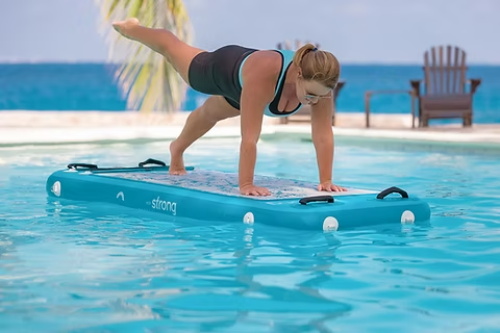
Exercising on water offers significant benefits for joint health. Wakeboarding is low-impact—the buoyancy of the water cushions each movement, minimizing stress on the hips, knees, and spine. This makes it an easy and safe sport, perfect for those with joint pain, recovering from injuries, or seeking a more gentle form of exercise.
Wakeboarding lessons also improve balance, proprioception, and mind-body coordination. The constant rocking keeps your nervous system alert—your core and small stabilizer muscles engage to maintain balance, performing tasks often neglected in land-based training. This not only improves stability but also boosts confidence in your daily movements.
You'll maintain balance as you move, engaging your abdominals, glutes, legs, and upper body simultaneously. Add dynamic moves like squats, lunges, and planks, and you get cardio, strength training, and balance training all in one fun-filled workout.
Exercising in the water can be calming. This soothing sensation helps ease anxiety, elevate your mood, and enhance focus. As you float through each move, it feels more like a peaceful meditation than a chore.
Sample Class Flow (40-minute class)
Warm-up: Enter the pool and kneel onto the board. Rock gently, rotating your torso, and breathing in sync with the rocking.
Core Activation: Try bird dogs on all fours, then planks (on your knees or toes, depending on comfort).
Standing Transitions: Step by step: From kneeling to squatting to standing; pause and find balance.
Dynamic Flow: Sun Salutations, Warrior Pose, Side Lunges—adapted for the water's resistance edge.
Power Bursts: Do modified push-ups on the plank. Do squats or bridges, and some exercises to help soften your fall.
Rest Time: Time your "fall"—flip into the water, splash, and start over with a smile.
Core Finisher: Crunches, screwdriver exercises (twisting your upper body input), or side planks.
Cool Down: Perform gentle stretches on the boat—child's pose, seated twists—before plunging into the soothing water.
Wakeboarding changes the way we think about fitness—it allows us to feel, float, fail, and power simultaneously. Instability isn't minimized, it's amplified. Every jolt awakens us, every splash reshapes our mindset, and every breath syncs our movements with our goals.
So, whether you're looking to improve joint health, strengthen your core muscles, or simply experience a refreshing workout, give Wakeboarding a try! On a floating mat, in the sun, or under the soft glow of indoor lights, you'll find an extraordinary ally: water. It supports you, challenges you, surprises you, but most inspiringly, it invites you to play along.
Recommended for you: